![]() |
|||||||||||||||||||||||||||||||||||||||||||||||||||||||||||||||||||||||||||||||||||||||||||||||||||||||||||||||||||||||||||||||||||||||||||||||||||||||||||||||||||||||||||||||||||||||||||||||||||||||||||||||||||||||||||||||||||||||||||||||||||||||||||||||||||||||||||||||||||||||||||||||||||||
| Home | Seed Scheme | Seed Village Concept | Mega Seed Project | Related Links | Gallary | FAQ's | Contacts | |
|||||||||||||||||||||||||||||||||||||||||||||||||||||||||||||||||||||||||||||||||||||||||||||||||||||||||||||||||||||||||||||||||||||||||||||||||||||||||||||||||||||||||||||||||||||||||||||||||||||||||||||||||||||||||||||||||||||||||||||||||||||||||||||||||||||||||||||||||||||||||||||||||||||
Seed Processing |
Seed :: Fibre :: Cotton(Hybrids) |
TNAU Seed Centre |
|||||||||||||||||||||||||||||||||||||||||||||||||||||||||||||||||||||||||||||||||||||||||||||||||||||||||||||||||||||||||||||||||||||||||||||||||||||||||||||||||||||||||||||||||||||||||||||||||||||||||||||||||||||||||||||||||||||||||||||||||||||||||||||||||||||||||||||||||||||||||||||||||||
QUALITY SEED PRODUCTION IN COTTON HYBRIDS
The main aim of hybrid seed production is to produce seeds of high vigour and viability. Cotton hybrid seed can be produced by emasculation and dusting (i.e.) hand – pollination method. In this method emasculation of the female parent in the evening and pollination of the same on the morning of the next day with the pollen from male parent. The resultant seed is hybrid. For sowing every time we have to cross and the resultant seeds are alone used. Land selection Soil texture and fertility of land should be according the requirements of seed crop. The land should be free from volunteer plants, weed plants and other crop plants. It should be comparatively free from soil borne diseases and insect pests. In the preceding season the same crop should not have been raised. If so, irrigate the field well in advance and allow the self sown seeds to decay which left in the pervious season. Select land with good soil fertility and drainage facility. Isolation distance Cotton is an often crops pollinated crop and the extent of natural crops – pollination depends upon insect activity. A minimum isolation distance of 50 metres for foundation seed class and 30 metres for certified seed class production, from fields of other varieties of the same species, other species and field of the same variety not conformity to varietal purity requirements for certification, is necessary. By isolating two fields, out crossing between varieties can be prevented so that genetic purity is maintained. Seed rate Female - 2.00 kg/ha ,Male - 0.5 kg/ha Sowing Sow the female and male seeds in a planting ratio of 8:2. Cotton hybrid sowing is different from other hybrids sowing. In other crops male sowing is followed by female sowing as per the planting ratio. But in case of cotton sowing it is based on the area of sowing. For example if we are raising 1 ac. means 80 cent is sown under female and male is sown in the remaining 20 cents leaving 5 m distance between two lines. This method of sowing is called block system. For hybrid seed production sow the female line at 3rd week of August and sow the male line (SB 289 E) at three different dates (i.e.) first sowing at the time of female sowing; 2nd sowing 10 days after 1st sowing and third 20 days after first sowing. Whereas for TCHB 213 hybrid seed production, sow the male line (TCB 209) at 1st week of August and the female line (TCH 1218) at 10-15 days after sowing. By this we can achieve perfect synchroisation (i.e.) uniform or simultaneous flowering in both the lines
Spacing Male : 60 x 45; 190 x 60 cm Female: 120 x 60 cm Fertilizer Apply 10 ton. of FYM / ha. Chemical fertilizers can be applied in following split doses:
Foliar application To get high vigour well filled seeds apart from basal application foliar application is also to be adopted. Spray DAP 2% solution on 70, 80, 90 & 100 DAS. This will increase the seed size, weight & yield. In order to increase pollen production and viability of the pollen and increased longevity in male line spray Boric acid 100 ppm (100 ml in one liter of water) on 75 & 90 DAS to days after sowing. Roguing Adequate and timely roguing is extremely important in seed production. They should be removed at the earliest possible date before flowering. It is wise to remove the whole plant and not just the flower by hand. Some times there may be differences in crop growth, variation in height, flowering duration and maturation etc., some plants flower very early and some pants flower very late. If he variety used is genetically pure there won’t be any variation in the filed. If variations are observe it is mainly due to genetic contamination (or) admixture of varieties. Stages of crop growth and characters looked into for rouging
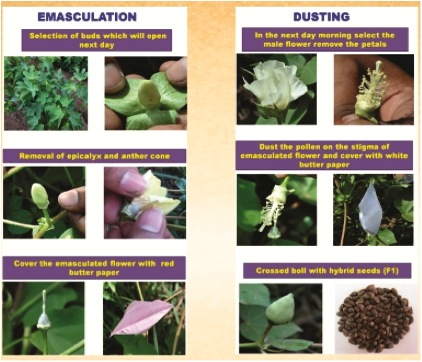
Some important techniques Cotton hybrid seed production method is different from the hybrid seed production methods. The technique involved is emaculation and dusting. Emasculation and dusting is an important operation. The emasculation is done in the female line. At the time of flowering in hybrid seed production for emasculation select the flower buds in female line which will opened on next day. Remove calyx, corolla and androecium without damaging the stigma and style, cover the emasculation flowers with red colour paper bag, to avoid cross pollination.
Gin the crossed kapas in separate gins created in seed processing units or farm gins under the close supervision of the authorities concerned to ensure purity and avoid seed damage. Irrigation schedule, pest and disease management and pinches of terminal shoots are similar to that of varieties. Harvest Harvest of cotton seed bolls should be done at the correct stage. The harvest is similar to that of variety. The bolls collected from the female plant alone are hybrid bolls while picking itself we came to know where the harvested boll is a hybrid one or not. Seed processing During seed processing the immatured ill-filled broken spoiled seeds other crop seeds, inert mater are removed. The seed separation based on density using specific gravity separator result in good quality seeds. Proper cleaning should be done before operation of any equipment each time before the processing of each variety otherwise physical admixture will occur. Seed storage Seed storage is another important area next to seed production. Seed storage is the period of preserving the quality of seeds in terms of germination and vigour until the next planting season. Seed moisture The initial moisture content of the seed is very important which decides the longevity of seeds. Seeds stored with high moisture content will loose viability very shortly under storage. Seeds dried to 10% M.C. and packed in gunny bag or cloth bag can be stored for a shot period. For long term storage seeds should be dried to 6% moisture content and packed in moisture vapour containers. Seed treatment Before storing, seed can be treated with any fungicide. Seeds can be treated either with captan or thiram @ 2 g/kg of seeds. Halogenation is another seed treatment method. Calcium oxy chloride and calcium carbonate are mixed at equal proportion and placed in a container for a week. The mixture can be used @ 4 g kg of seeds. This is cost effective, safe and ecofriendly method of seed treatment. Containers Seeds are hygroscopic in nature. Hence based on the existing environmental conditions seeds can absorb or let the moisture. In humid and coastal area it is better to use moisture vapour proof containers (700 gauge polythene bags). Always use fresh bags. Care should be taken while staking. The seed bags can be stacked to a maximum of 6 or 7 bags only otherwise seeds in lower bags get affected due to over pressure. Stake the bags over wooden pallets / Tarpaulin. Bags should not come in contact with side walls or floor. Field standards
Varietal characteristics
Characters of parental line of hybrids
|
|||||||||||||||||||||||||||||||||||||||||||||||||||||||||||||||||||||||||||||||||||||||||||||||||||||||||||||||||||||||||||||||||||||||||||||||||||||||||||||||||||||||||||||||||||||||||||||||||||||||||||||||||||||||||||||||||||||||||||||||||||||||||||||||||||||||||||||||||||||||||||||||||||||
Seed Treatments |
|||||||||||||||||||||||||||||||||||||||||||||||||||||||||||||||||||||||||||||||||||||||||||||||||||||||||||||||||||||||||||||||||||||||||||||||||||||||||||||||||||||||||||||||||||||||||||||||||||||||||||||||||||||||||||||||||||||||||||||||||||||||||||||||||||||||||||||||||||||||||||||||||||||
Seed Certification |
|||||||||||||||||||||||||||||||||||||||||||||||||||||||||||||||||||||||||||||||||||||||||||||||||||||||||||||||||||||||||||||||||||||||||||||||||||||||||||||||||||||||||||||||||||||||||||||||||||||||||||||||||||||||||||||||||||||||||||||||||||||||||||||||||||||||||||||||||||||||||||||||||||||
Seed Storage |
|||||||||||||||||||||||||||||||||||||||||||||||||||||||||||||||||||||||||||||||||||||||||||||||||||||||||||||||||||||||||||||||||||||||||||||||||||||||||||||||||||||||||||||||||||||||||||||||||||||||||||||||||||||||||||||||||||||||||||||||||||||||||||||||||||||||||||||||||||||||||||||||||||||
| Home | Seed Scheme | Seed Village Concept | Mega Seed Project | Related Links | FAQ's | Contacts | |
|||||||||||||||||||||||||||||||||||||||||||||||||||||||||||||||||||||||||||||||||||||||||||||||||||||||||||||||||||||||||||||||||||||||||||||||||||||||||||||||||||||||||||||||||||||||||||||||||||||||||||||||||||||||||||||||||||||||||||||||||||||||||||||||||||||||||||||||||||||||||||||||||||||
| © All Rights Reserved. TNAU-2008. |
|||||||||||||||||||||||||||||||||||||||||||||||||||||||||||||||||||||||||||||||||||||||||||||||||||||||||||||||||||||||||||||||||||||||||||||||||||||||||||||||||||||||||||||||||||||||||||||||||||||||||||||||||||||||||||||||||||||||||||||||||||||||||||||||||||||||||||||||||||||||||||||||||||||