| |
 |
Common name: Mango
S.N: Mangifera indica
Family: Anacardiaceae
Major pests |
Major pests of mango
| I. Borers |
| Mango stem borer, Batocera rufomaculata |
Symptoms |
Identification |
Management |
| Bark borer, Indarbela tetraonis |
Symptoms |
Identification |
Management |
| Shoot borer, Clumetia transversa |
Symptoms |
Identification |
Management |
| II. Inflorensence and fruit feeders |
Mango hoppers, Idioscopus niveoparsus
I. clypealis
Amirtodus atkinsoni |
Symptoms |
Identification |
Management |
| Inflorescence midge, Dasineura amaramanjarae |
Symptoms |
Identification |
Management |
| Aphid, Toxoptera odinae |
Symptoms |
Identification |
Management |
| Flower webber, Eublemma versicolor |
Symptoms |
Identification |
Management |
| Loopers, Thalassodes quadraria, Chloroclystis sp |
Symptoms |
Identification |
Management |
| Bud mite, Aceria mangiferae |
Symptoms |
Identification |
Management |
| Fruit fly, Bactrocera (Dacus) dorsalis |
Symptoms |
Identification |
Management |
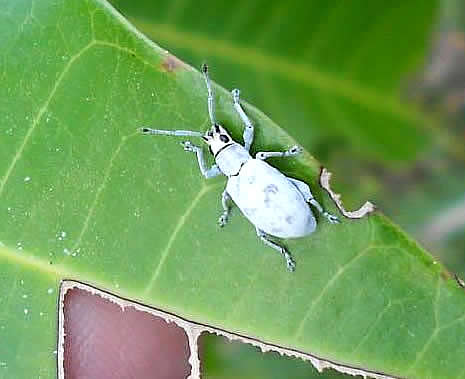
| Mango nut weevil, Sternochaetus mangiferae |
Symptoms |
Identification |
Management |
| III. Leaf feeders |
| Shoot webber: Orthaga exvinacea |
Symptoms |
Identification |
Managemet |
| Leaf gall midges , Amradiplosis amraemyia |
Symptoms |
Identification |
Management |
| Leaf twisting weevil, Apoderus tranquebaricus |
Symptoms |
Identification |
Management |
| Hairy caterpillars, Euproctis fraterna, Prothesia scintillans |
Symptoms |
Identification |
Management |
| IV. Sap feeders |
| Scales, Chionaspis vitis |
Symptoms |
Identification |
Management |
| Gaint mealybug, Drosicha mangiferae |
Symptoms |
Identification |
Management |
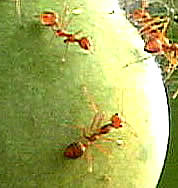
| Red ant, Oecophylla smaradina |
Symptoms |
Identification |
Management |
A. Borers
1. Mango stem borer, Batocera rufomaculata
Symptoms of damage
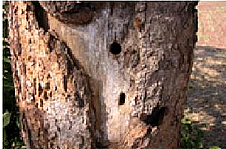
- Grub tunnels in the sapwood on the trunk or branches
- Grub bore into the sap wood and macking irregular tunnels.
- Feeding the vascular tissues
- interruption of nutrient and water transport on the tissue
- Drying of terminal shoot in early stage
- Frass comes out from several points and some times sap oozes out of the holes
- Wilting of branches or entire tree
 |
Identification of pest
- Grub - Linear, fleshy, apodous
- Adult - Grayish beetle with two pink dots and lateral spine
|
Management
- Remove and destroy dead and severely affected branches of the tree
- Remove alternate host, silk cotton and other hosts
- Grow tolerant mango varieties viz., Neelam, Humayudin.
- Swab Coal tar + Kerosene @ 1:2 or Carbaryl 50 WP 20 g / l (basal portion of the trunk - 3 feet height) after scraping the loose bark to prevent oviposition by adult beetles.
- Padding with monocrotophos 36 WSC 10 ml in 2.5 cm /tree soaked in absorbent cotton.
- If infestations are severe then apply the copper oxychloride paste on the trunk of the tree.
- Hook out the grub from the bore hole - apply monocrotophos 36 WSC 10 to 20 ml/ hole
- One celphos tablet (3 g aluminum phosphide) per hole
- Apply carbofuran 3G 5 g per hole and plug with mud.
Top
2. Bark borer, Indarbela tetraonis
Symptoms of damage
- Young trees may succumb to the attack.
- Caterpillars bore into the trunk or junction of branches
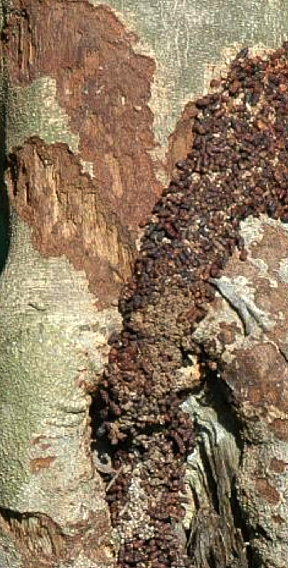
- Caterpillars remain hidden in the tunnel during day time and come out at night, feed on the bark.
- Presence of gallery made out of silk and frass
Top
Identification of pest
- Larva - Stout and dirty brown in colour
- Adult
- Stout yellowish –brown moth with brown wavy markings on the forewings
- Hind wings is white colour.
- Males are smaller than the females.
Top
Management
- Remove and destroy dead and severely affected branches of the tree
- Remove alternate host, silk cotton and other hosts
- Grow tolerant mango varieties viz., Neelam, Humayudin.
Swab Coal tar + Kerosene @ 1:2 or Carbaryl 50 WP 20 g / l (basal portion of the trunk - 3 feet height)
after scraping the loose bark to prevent oviposition by adult beetles.
- Padding with monocrotophos 36 WSC 10 ml in 2.5 cm /tree soaked in absorbent cotton.
- If infestations are severe then apply the copper oxychloride paste on the trunk of the tree.
- Hook out the grub from the bore hole - apply monocrotophos 36 WSC 10 to 20 ml/ hole
- One celphos tablet (3 g aluminum phosphide) per hole
- Apply carbofuran 3G 5 g per hole and plug with mud.
Top
3. Shoot borer, Clumetia transversa
Symptoms of damage
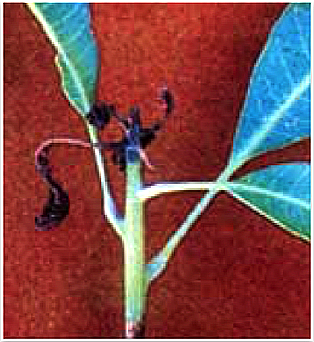
- Terminal shoots show tunnel from top to down wards.
- Stunting of seedlings with terminal bunchy appearance.
Top
Identification of pest:
- Larva - Caterpillar is dark pink with dark brown prothroacic shield.
- Adult - Adult is greyish moth with grey wings having wavy lines.
Top
Management
- Field sanitation
- Collect and destroy the infested plant parts
- Summer ploughing to expose the pupae
- Spray carbaryl 50WP 0.1%.
Top
B. INFLORESCENCE AND FRUIT FEEDERS
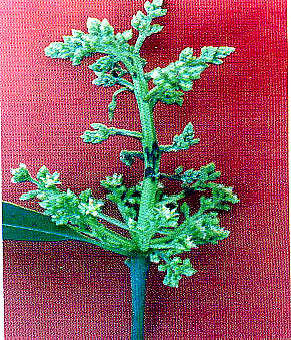
4. Mango hoppers, Idioscopus niveoparsus, I. clypealis, Amirtodus atkinsoni
 |
Symptoms of damage
- Nymphs and adults suck the sap of inflorescence
- Withering
- Shedding of flower buds and flowers
- Presence of honey dew secrecation on lower leaves and development of sooty mould.
- Clicking sound - movement of jassids amidst leaves.
- Hoppers provide shelter in the cracks and crevices of the barks on the tree
|
Top
Identification of pest
- Nymph - Nymphs pale yellow, very active and hide in lower shoots or in cracks in the barks.
- The insect appears in February when mango trees come to flowering.
- Adult
- a. Idioscopus niveoparsus; Adults: dark with wavy lines on wings and three spots on scutellum.
- b. I. clypealis; Adults: small, light brown with dark spots on the vertex and two spots on scutellum.
- c. Amirtodus atkinsoni; Adults: large, light brown with two spots on scutellum.
Top
MANAGEMENT
- Avoid close planting, as the incidence very severe in overcrowded orchards.
- Orchards must be kept clean by ploughing and removal of weeds.
-
Spray two rounds of acephate 75 SP@ 1g/lit or phosalone 35 EC@ 1.5 ml/li
OR
Spray two rounds of imidacloprid 0.2ml/lit or phosphamidon 40SL 2 ml/lit of water.
- First spray at the time of panicle emergence , second spray two weeks after first spray.
- Wettable sulphur @ 2 g/lit may be sprayed after spraying carbaryl to avoid mite resurgence.
- The mixture toxaphene with sulphur (1:1) have been reported to be effective against pest.
- Neem oil 5 ml/lit of water can be mixed with any insecticides
- Spray 3 per cent neem oil or neem seed kernel powder extract 5 per cent
Top
5. Inflorescence midge
Symptoms of damage
- Maggots attack the inflorescence stalk, flowers and small developing fruits
- Maggot bore into the bud and feeds on inner content
- Buds fail to open and drop down
Identification of pest
- Larva - A maggot light yellowish colour and moults three times.
- Adult
i) a. Dasineura amaramanjarae: Orange red
ii) b. Erosomyia indica: Yellowish fly
iii) c. Procystiphora mangiferae: Light orange fly
Management
- Remove and destroy affected flowers and tender shoots
- Spray dimethoate 30 EC @ 0.06%, methyl demeton 25 EC @0.05%
Top
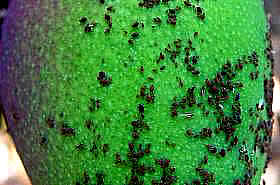
6. Aphid, Toxoptera odinae
Symptoms of damage
- Reddish brown aphids suck the sap from leaves, petiole and fruits
- Shedding of flowers.
Management
- Collect and destroy the damaged plant parts along with nymphs and adults
- Dimethoate 30 EC or methyldemeton 25 EC 1 ml/l
- Release coccinelid predators
Top
7. Flower webber, Eublemma versicolor
Symptoms of damage
- Webbing of flowers and bore holes in inflorescence stalk.
Identification of pest
- Larva - Greenish yellow with light brown head.
- Adult - Moth has purplish pink or light orange wings.
Management
- Spray phosalone 35 EC 2ml/lit for effective control
Top
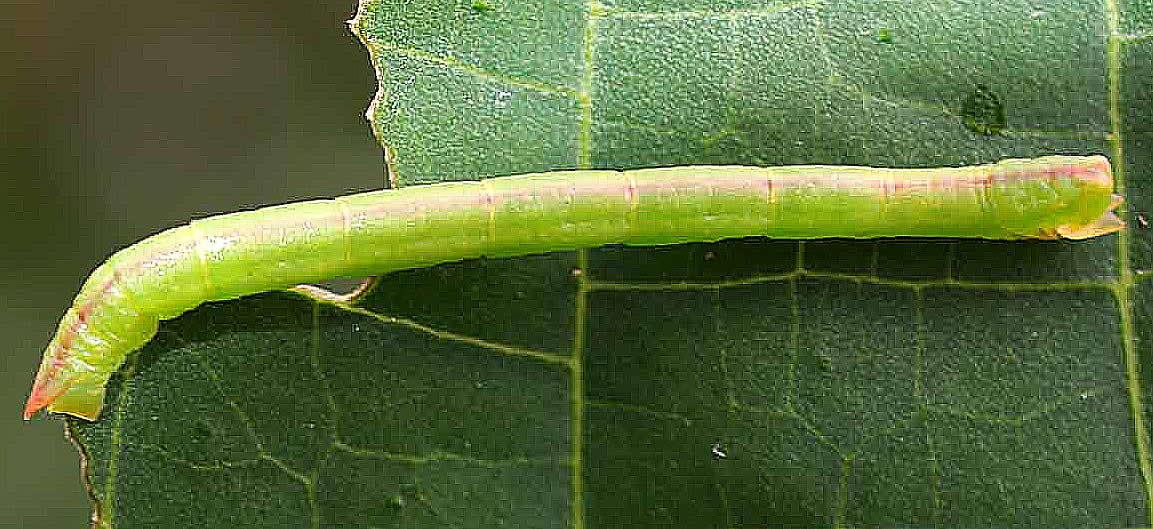
8. Loopers, Thalassodes quadraria, Chloroclystis sp
Symptoms of damage
- Webbed inflorescence and subsequent drying of inflorescence.
Top
Identification of pest
a. Thalassodes quadraria:
- Grey greenish looper.
- Adult: green with angular wings
b. Chloroclystis sp:
- Brownish looper .
- Adult: Greyish moth with wavy lines
Management
- Collect and destroy the damaged leaves
- Use light trap 1/ha to attract and kill the adults
- Spray malathion 50 EC 2ml/lit
9. Bud mite, Aceria mangiferae
Symptoms of damage
- Malformed leaves
- Buds giving bunchy top appearance
- Leading to bud necrosis. Normally occurs during summer.
Management
- Dicofol 18.5 EC 2.5ml/lit or wettable sulphur 50WP 2 g /lit
Top
10. Fruit fly, Bactrocera (Dacus) dorsalis
Symptoms of damage
- Maggot bore into semi-ripen fruits with decayed spots and dropping of fruits.
- Oozing of fluid
- Brownish rotten patches on fruits.
 |
 |
Maggots of fruit fly dropping out of mango fruit |
Mango fruit fly |
Top
 |
 |
Identification of pest
- Larva - Yellowish apodous maggots.
- Adult - Light brown with transparent wing
|
Maggot |
Adult |
|
Management
- Collect fallen infested fruits and dispose them by dumping in a pit
- Provide summer ploughing to expose the pupa
- Monitor the activity of flies with methyl eugenol sex lure traps.
- Bait spray - combing any one of the insecticides and molasses or jaggery 10 g/l,
- fenthion 100EC 1ml/l,
- malathion 50EC 2 ml/l,
- dimethoate 30 EC 1 ml/l,
- carbaryl 50 WP 4 g/l. two rounds at 2 weeks interval before ripening of fruits.
-
Prepare bait with methyl eugenol 1% solution mixed with malathion 0.1%.
- Take 10 ml of this mixture per trap and keep them in 25 different places in one hectare
- Spray fenthion 100 EC 2 ml/ lit or malathion 50 EC 2ml/lit.
Biological control
- Field release of natural enemies Opius compensates and Spalangia philippines
Top
11. Mango nut weevil, Sternochaetus mangiferae
 |
 |
 |
 |
Symtom |
Grub |
Grub on mango |
Adult on Mango |
Symptoms of damage
- Grub makes zigzag tunnels in pulp
- Eats unripe tissue and bore into cotyledons
- Fruit dropping at marble stage
- oviposition injuries on marble sized fruits.
- Tunnelled cotyledons in mature fruit by grubs.
Identification of pest
- Grub - A full grown grub is legless, fleshly and yellow with dark head.
- Dark weevils after emergence remain inactive, hidden in the cracks and crevices on the trunk
- Adult - Adult is dark brown with a short snout.
Management
- Collect and destroy the fallen fruits
- Spray application of fenthion 100EC 1ml/l; (first at marble stage of the fruit second at 15 days interval).
- During non flowering season direct spray towards the base of the trunk
C. LEAF FEEDERS
12. Shoot webber: Orthaga exvinacea
 |
 |
 |
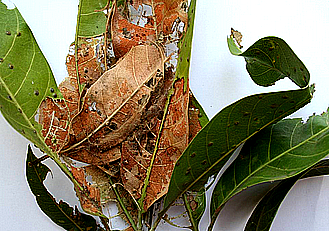
Symptoms of damage
- Caterpillar webbing of terminal leaves and scrapes the chlorophyll content
- Drying up plants.
|
Tip dry |
Inflorescence entangled |
Nest of dried leaves |
Identification of pest
- Larva - Pale greenish with brown head and prothroacic shield.
- Adult - Brown moth with wavy lines on fore wings.
Management
- Remove and destroy the webbed leaves along with larva and pupa
- Spray carbaryl at 50 WP @ 0.1%
- Encourage the activity of predators, carabid beetle Parena lacticincta, reduvid Oecama sp
Top
13. Leaf gall midges
a. Amradiplosis amraemyia
b. A. brunneigallicola
c. A. viridigallicola
d. Alassomyia tennuspatha
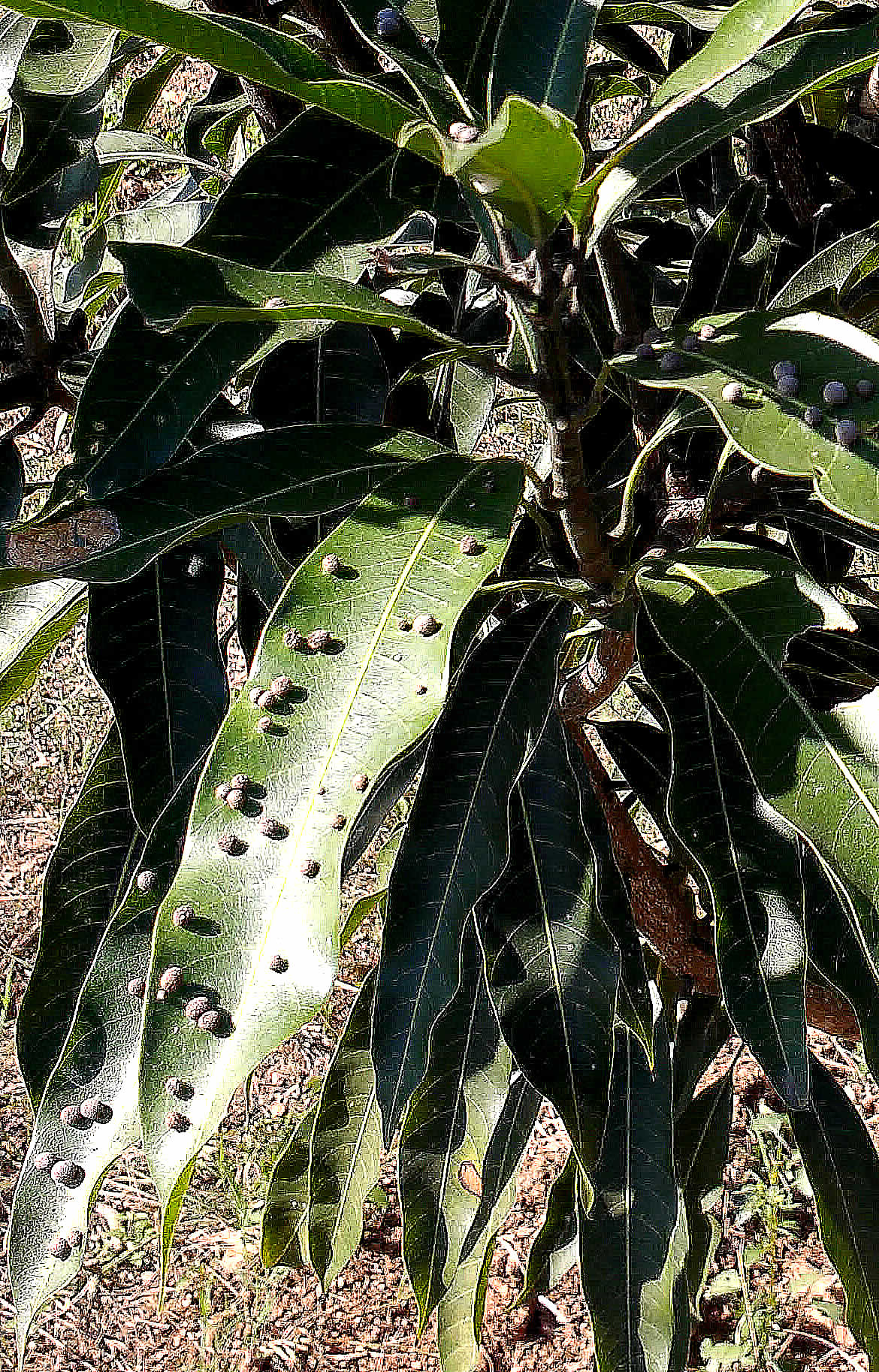
Symptoms of damage
- Presence of galls on leaves.
Identification of pest
- Maggots – are yellowish
- Adult - Tiny mosquito like.
Management
- Spray dimethoate 30 EC or methyldemeton 25 EC @ 2ml/lit.
Top
14. Leaf twisting weevil, Apoderus tranquebaricus
Symptoms of damage
- Twisting, rolling and drying of terminal leaves.
Identification of pest
- Grub: yellowish
- Adult: Reddish brown weevil with long snout
Management
- Spray monocrotophos 36WSC 1.5 ml.
Top
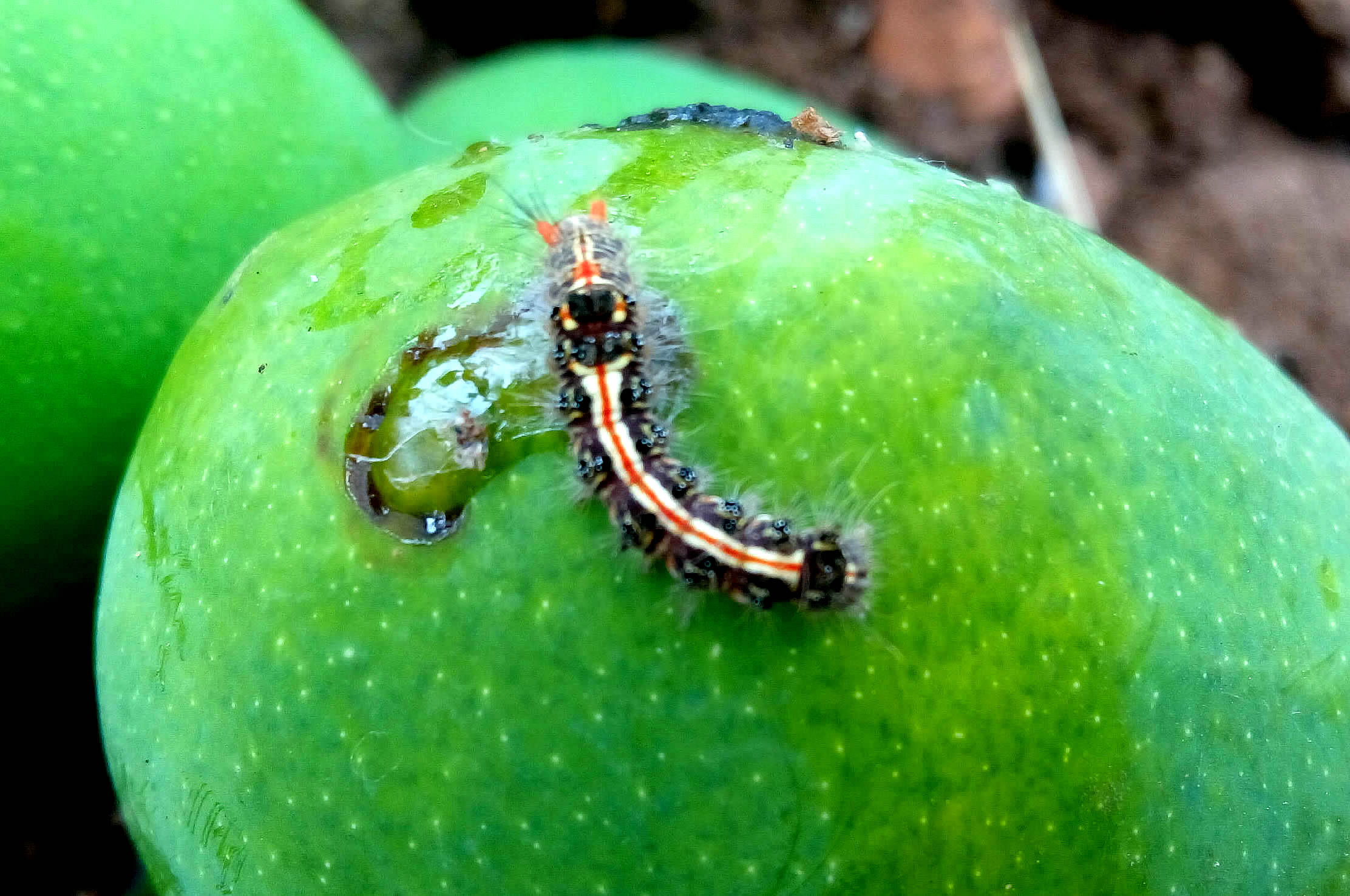
15. Hairy caterpillars, Euproctis fraterna , Prothesia scintillans
Symptoms of damage
Identification of the pest
Euproctis fraterna
- Larva - yellowish with brown head, yellowish stripe with central red line
- black hairs dorsally on first three segments
- Adult - yellowish moth with black spots.
Prothesia scintillans
- Larva - Reddish with red head surrounded by whitish hairs
- Adult - yellowish moth with transverse line on the fore wings.
Management
- Collect and destroy egg masses and caterpillars
- Use burning torch to kill the congregating larvae
- Use light trap to attract and kill the adults
- Spray chlorpyriphos 20 EC or quinalphos 25 EC 2ml/lit
Top
16. Scales,
a. Chionaspis vitis- White elongate hard scale
b. Chloropulvinaria psidii- Females with white ovisac
 |
Symptoms of damage
- Both nymphs and adults desap the leaves cause yellowing.
Identification of pest
- Adult - White, elongate, hard scale
Management
- Pruning of infested branches and burning
- Dimethoate or phosphomidon are effective
|
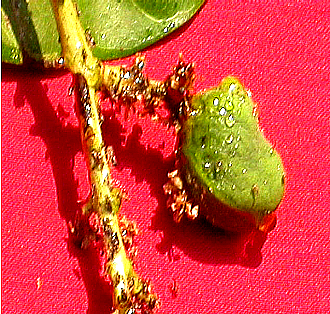
17. Gaint mealybug, Drosicha mangiferae
 |
Symptoms of damage
- Drying of leaves and inflorescence
- Presence of pinkish nymphs and adult mealy bugs on fruit and fruit stalk.
Identification of pest
|
Infestation on fruit |
|
Management
- Remove weeds like Clerodendrum inflortunatum and grasses by ploughing during June-July.
- Band the trees with 20 cm wide alkalthene of polythene (400 gauge) in the middle of December
(50 cm above the ground level and just below the junction of branching).
- Stem with jute thread and apply a little mud of fruit tree grease on the lower edge of the band.
- If necessary apply methyl parathion1ml/lit, chlopyriphos 20EC 2.5 ml/l
- Release of Australian ladybird beetle, Cryptolaemus montrouzieri @ 10/tree
Top
18.Red ant, Oecophylla smaradina
 |
Symptoms of damage
- Webbed of leaves with ants forming nests.
Identification of pest
- Reddish ant, queen – olive green in colour
|
Top
Management
- Nests should be removed and destroyed mechanically or by spraying any of the contact insecticides
- Monocrotophos 2ml/lit or DDPV 100EC 1ml/lit
Top
|